Staying Fit When You Have No Time and No Gym
You do not have an hour and a half for the gym, a shower, and a drive home. You have maybe twenty minutes between the last school run and the point where...
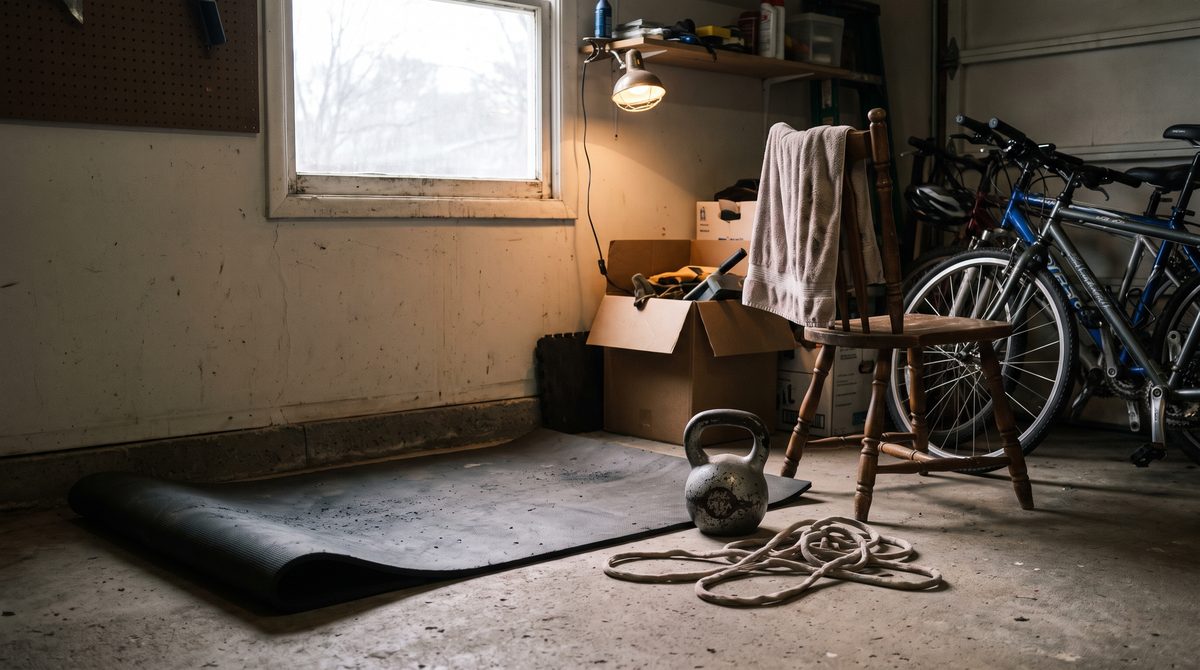
You do not have an hour and a half for the gym, a shower, and a drive home. You have maybe twenty minutes between the last school run and the point where someone needs help with homework or dinner needs to start. The question is not whether you can build the kind of routine a fitness magazine describes. You cannot. The question is whether twenty minutes, done regularly, is worth anything at all. It is.
Why short sessions actually work
The idea that exercise only counts above a certain length or intensity is left over from a version of fitness built for people with spare hours, not spare minutes. Your body does not know the difference between one long session and several short ones spread across a week. What it responds to is regularity: doing something often enough that it becomes normal rather than an event you have to plan around.
This matters because the realistic choice for most fathers is not "one hour three times a week" versus "twenty minutes most days." It is "twenty minutes most days" versus nothing, because the hour never actually gets scheduled. Once you accept that the short session is competing with zero, not with the ideal version, it stops feeling like a compromise.
Consistency beats intensity, and here is what that means in practice
A hard session you do once and then avoid for two weeks because you are sore and busy has done less for you than a moderate session you repeat forty times. This is not a motivational line. It is just arithmetic: forty small deposits add up to more than one large one you cannot make again soon.
In practice, this means you should pick something you can imagine doing again tomorrow, not something that impresses you today. If a session leaves you unable to walk properly the next morning, it has probably cost you the next two or three sessions as well, and the school run does not pause for that. The goal is to build a habit that survives a bad week, not a personal record that requires a good one.
What this looks like on an ordinary week
You do not need a program. You need a short list of things you can do without equipment, in the time you actually have, in the clothes you are already wearing.
- A ten to twenty minute session most days, not a long session twice a week. Bodyweight movements, a walk with pace, stairs if you have them. The content matters less than the repetition.
- Movement stacked onto things you are already doing. Carrying kids, carrying groceries, playing the kind of games at the park that involve running are not lesser versions of exercise. They count.
- One slightly longer session on a weekend morning if the schedule allows it, treated as a bonus, not the foundation. If it does not happen, the week still worked, because the daily short sessions were the actual plan.
Notice that none of this requires a gym membership, a piece of equipment, or a block of free time that does not currently exist in your week. That is the point. A plan that depends on conditions you do not have is not a plan.
The honest version of the dad-bod conversation
There are two unhelpful ways to talk about this, and both are common. One says you should feel ashamed of how your body has changed since you had kids, as though the years you spent sleep-deprived and prioritizing everyone else were a personal failing. The other says none of it matters, that caring about your fitness at all is vanity you should have grown out of. Neither is honest.
The truer version is simpler. Your body changed because your life changed, and that is not a moral event. Fatherhood reallocates your time and attention toward people who need it, and fitness is often one of the first things to lose its slot. That is a scheduling outcome, not a character flaw.
At the same time, it is fair to want to feel stronger, move more easily, and have more energy at the end of a day that starts before six and does not really end until the kids are asleep. Wanting that is not vanity. It is wanting to be more capable for the actual job you are doing, which includes lifting car seats, carrying sleeping kids up stairs, and keeping up on a bike ride you promised months ago. You do not need a reason beyond that, and you certainly do not need a before-and-after story to justify it.
So the honest position sits between the two extremes: nothing about your current shape needs defending or apologizing for, and wanting to build some strength and stamina back is a reasonable thing to spend twenty minutes a day on. You get to hold both of those at once.
A note on limits
General fitness advice assumes a body with no particular issues to work around, and that is not everyone's situation. If you have an existing health condition, a previous injury, or any reason to be cautious about increasing physical activity, talk to a doctor before starting or changing a routine. This is a genuinely useful thing to check, not a formality, and nothing here is a substitute for that conversation.
One thing to do this week
Pick a single ten-minute slot that already exists in your day, most likely right after the kids are dropped off or right before dinner starts, and put the same short, simple movement session there for five days straight. Do not change the plan mid-week and do not extend it to prove a point. The goal is not this week's effort. It is making the slot boring and automatic enough that it survives into next week too.