New or Used: When Each One Is Actually the Right Call
You are standing in front of a listing, or a showroom, or a secondhand app, trying to work out whether the lower price is a good deal or a problem waiting to...
You are standing in front of a listing, or a showroom, or a secondhand app, trying to work out whether the lower price is a good deal or a problem waiting to happen. The honest answer is that it depends on what you are buying, not on some general virtue of buying used. A few questions applied consistently will get you to the right call faster than gut feeling will.
The three questions that actually decide it
Before you look at a single listing, run the item through three questions. They matter more than the price tag in front of you.
Where is it on the depreciation curve? Some things lose most of their value in the first year or two and then level off. A car is the clearest example: the steepest drop happens early, so a two or three year old model can cost noticeably less than new while having most of its useful life still ahead of it. Furniture and hand tools behave similarly. Other things do not depreciate the same way at all. A mattress does not get cheaper to buy used because it is not really the same product once someone has slept on it for years; the part you are paying for is support and hygiene, and both degrade with use rather than sitting flat.
What is the warranty actually worth to you? A warranty is not a nice-to-have, it is insurance against a specific kind of bad luck: the unit that fails early through no fault of yours. On something with expensive, hard-to-diagnose failure modes (a washing machine, a laptop, a car's transmission) that insurance has real value, and buying used usually means buying without it or with a much shorter version of it. On something with cheap, obvious failure modes (a hand saw, a bookshelf, a stroller frame) the warranty was never doing much work, so losing it costs you little.
What does failure actually cost you? Not the replacement cost. The cost of the thing failing at the worst possible time. A used power drill that dies mid-project costs you a trip to the shop. A used car seat that fails in a crash costs you something you cannot buy back. Rank what you are buying by how bad the worst case is, not by how likely it feels, because low-probability high-consequence failures are exactly the ones people underweight when a good price is sitting in front of them.
Where used is the right call
Once you run items through those three questions, a pattern shows up. Used tends to win when depreciation is steep, warranty value is low, and the cost of failure is recoverable.
- Cars. The early depreciation hit is real and well understood, and a competent inspection before purchase catches most of the problems that matter. A used car that fails costs you money and inconvenience, not something irreversible, provided you are not buying past the point where major components are due for replacement.
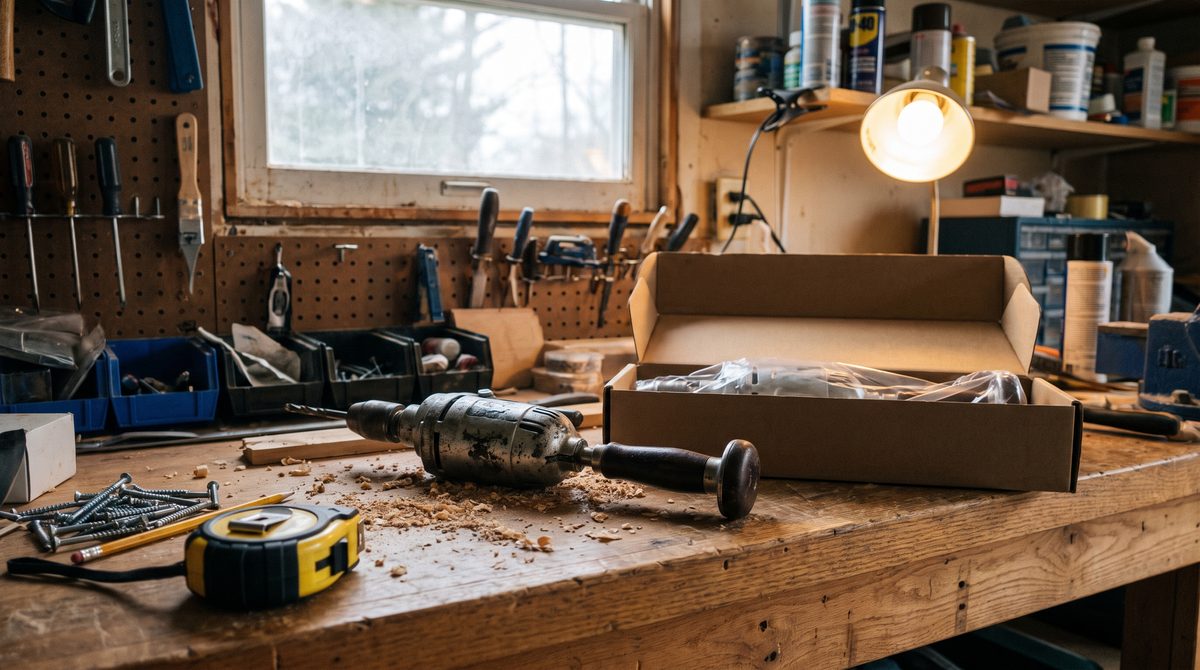
- Hand tools and most power tools. A drill, a circular saw, a set of wrenches: these have simple mechanical failure modes you can usually see or hear before they become dangerous. Worn is visible. A tool that has been used carefully for years and still runs is a known quantity in a way a lot of new purchases are not.
- Furniture. Solid wood pieces, in particular, are often built to a standard that has not been matched by newer cheaper equivalents. Wear here is cosmetic, not structural, in most cases, and you can inspect joints and finish yourself before buying.
- Big kitchen appliances bought from someone you can talk to. Not a stranger's curbside listing sight unseen, but a working unit from someone who can tell you its history and let you run it before you pay. The failure mode is inconvenience, and you can often get a partial warranty transferred or negotiate the price down to cover the risk.
Where used is a false economy
The pattern reverses for a specific set of categories, and the reversal is not about being cautious for its own sake. It is that the cost of being wrong stops being recoverable.
- Car seats. A car seat's job is to perform correctly exactly once, under conditions you cannot test in advance. You cannot see internal damage from a prior impact, you often cannot verify the full history of a used one, and manufacturers set expiration dates because plastic and foam degrade in ways that are not visible from the outside. The saving on a used seat is small relative to what you are trusting it to do.
- Mattresses. Beyond the hygiene issue, the support structure inside a mattress breaks down with years of use in a way that is not obvious from pressing on it in someone's spare room. You are buying years of sleep quality and back support, and that is precisely the part that a used mattress has already spent.
- Safety equipment generally. Bike helmets, harnesses, smoke alarms, anything whose entire function is to work correctly in a rare emergency. These fail invisibly. A helmet with hairline damage from a prior drop looks fine and is not fine. You cannot inspect your way to certainty here, so the used discount is not compensating you for a risk you can actually manage.
- Anything with a recall history you cannot check. Recalls exist because a manufacturer found a real defect after the product shipped. When you buy new, you can register the item and get notified if a recall lands later. When you buy secondhand, especially from an individual seller, you often cannot confirm whether a specific unit was ever recalled, repaired, or replaced under a prior recall. If you cannot check it, treat it as if the worst case is true, particularly for anything involving a child.
What to do this week
Pick the one purchase you are actually weighing right now, whether it is a car, a piece of furniture, or something for the kids, and run it through the three questions above before you look at a single price. If it lands in the false-economy list, stop comparing prices altogether and shop new. If it does not, the used listing you already had your eye on is probably the smarter buy, and now you know why.