Home Projects That Are Actually Worth the Money
You are standing in a room you want to change, weighing whether this is money you are investing or money you are spending.
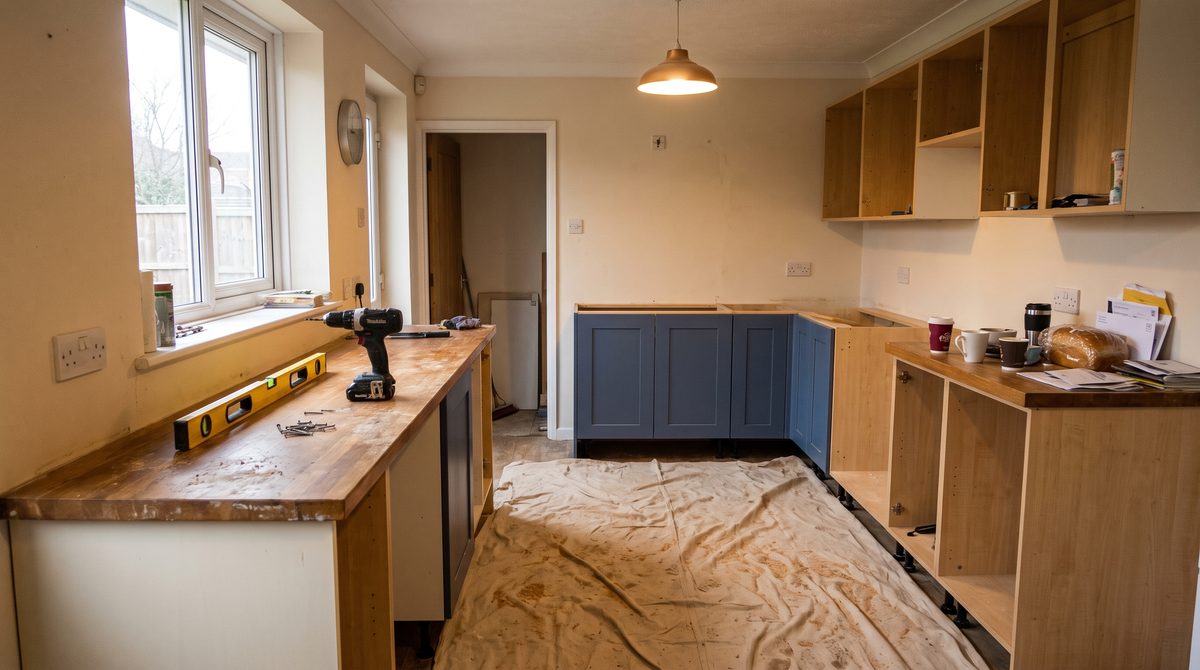
The question to ask before you touch the budget
You are standing in a room you want to change, weighing whether this is money you are investing or money you are spending. Those are different decisions with different rules, and the trap is treating the second one like the first. Before you call a contractor, work out which one you are actually making.
Value and preference are not the same thing
A project holds value when it fixes something a future buyer will care about, or brings your home in line with what is normal for your street. A project is preference when it makes your life better but would not move a buyer's decision, or would only appeal to someone with your exact taste. Both are legitimate reasons to spend money. Only one of them is an investment, and confusing the two is how people end up disappointed at resale.
Preference projects are not a mistake. A home theater room, a bold paint choice, a garden built around plants you love: these can be worth every dollar in daily enjoyment. Just do not budget for them expecting the house to hand the money back to you later.
What tends to hold value
These are the categories that consistently show up when real estate agents talk about what buyers notice and ask about. None of them come with a guaranteed number, because the number depends entirely on your market, your home's condition, and what buyers in your specific area expect.
- Anything that keeps the house working. A roof that is not leaking, a heating and cooling system that runs reliably, windows that seal properly, and a foundation with no visible problems. Buyers do not get excited about these, but they will walk away from a house that is missing them, or they will demand a price cut equal to fixing them plus a margin for the hassle.
- A kitchen or bathroom that is dated but functional getting a moderate refresh. New countertops, updated cabinet fronts or hardware, current fixtures. This is different from a full gut renovation. A moderate refresh brings a tired room up to normal expectations. A full renovation with high-end finishes often costs more than it recovers, because you are now the most expensive kitchen on a street of ordinary kitchens.
- Curb appeal. Paint in good condition, a tidy and simple landscape, a front door and entry that look cared for. This is one of the cheapest categories relative to what it buys you, because it changes the first impression before a buyer has walked through the door.
- Adding usable space you were missing, such as finishing a basement into a genuine living area or adding a bathroom to a house that only has one. Space that solves a real shortage tends to matter more than space that adds a luxury on top of what the house already has.
- Energy efficiency improvements that lower ongoing costs, like insulation and sealing. Buyers increasingly ask about running costs, and a house that is cheaper to heat and cool is easier to sell on that basis alone.
What is usually preference sold as investment
These get pitched as improvements that will pay for themselves. Sometimes they will contribute something. Often the truth is that you wanted the project for yourself and the investment framing is what got you to say yes.
- A swimming pool. It appeals to a smaller pool of buyers than you think, it adds an ongoing cost and maintenance burden that some buyers actively avoid, and in colder climates it is usable for a fraction of the year. If you want a pool for your family, want it for that reason.
- Highly customized rooms, like a wine cellar, a home gym built into a converted space, or a media room with fixed, expensive equipment. These are wonderful if you use them constantly. They are also the first thing a buyer mentally prices out as "I would need to redo this."
- Landscaping built around a specific, high-maintenance vision. An elaborate garden that needs constant attention is a feature to some buyers and a maintenance bill to most others.
- The most expensive version of anything on your street. Even a genuinely good project, like a kitchen renovation, stops returning value once it pushes your home noticeably above what similar homes nearby are worth. Buyers shopping in a price range compare your house to others in that range, not to how much you spent.
How to tell before you spend
The honest way to find out is to ask people who see your local market every week, not to trust a general rule, because what holds value in one market can be irrelevant in another.
- Ask a local real estate agent what buyers in your specific area ask about first, before you commit to a project. This costs you nothing but a conversation, and it is more accurate than any general advice, including this article.
- Look at what similar homes near you actually have. If every comparable house on your street has two bathrooms and yours has one, that gap is worth closing. If every house already has an updated kitchen, redoing yours brings you level rather than ahead.
- Consider how long you plan to stay. A project you will enjoy for ten years before selling is a different calculation than one you are doing purely to sell next year. The longer you stay, the more it is fair to weigh your own enjoyment alongside resale.
- Separate "fixes a problem" from "adds a luxury." A problem, once fixed, tends to be recognized as necessary by any buyer. A luxury is recognized only by a buyer who wants that particular luxury.
Return on any home project varies by local market, by the condition of the rest of your house, and by timing. Nobody can hand you a number that applies to your street specifically, and you should be skeptical of anyone who tries.
This week
Call one local real estate agent, tell them what you are considering, and ask them directly what buyers in your neighborhood have been asking for lately. That single conversation will tell you more about whether your project is an investment or a preference than any general list can.