Electric or Gas: Choosing a Family Car in 2026
You are not really choosing between electric and gas. You are choosing between two different shapes of cost and convenience...
The decision underneath the decision
You are not really choosing between electric and gas. You are choosing between two different shapes of cost and convenience, and which shape fits depends on how you actually use a car, not how you imagine using it. Most family driving is short and repetitive: school runs, errands, the commute. Then once or twice a year there is a long trip that stresses the car in a completely different way. Get honest about both patterns before you get attached to either engine type.
What your week actually looks like
Write down a normal week. School drop-off and pickup, sports practice, groceries, maybe a commute. Add it up in miles or kilometers. For the vast majority of families this daily total is modest and entirely predictable, which matters more than any spec sheet number, because it tells you what kind of charging or fueling routine you are actually signing up for.
Charging reality for school runs plus one long trip a year
This is the pattern that decides whether an electric car will feel effortless or irritating, and it splits cleanly into two very different experiences.
The daily routine, if you can charge at home
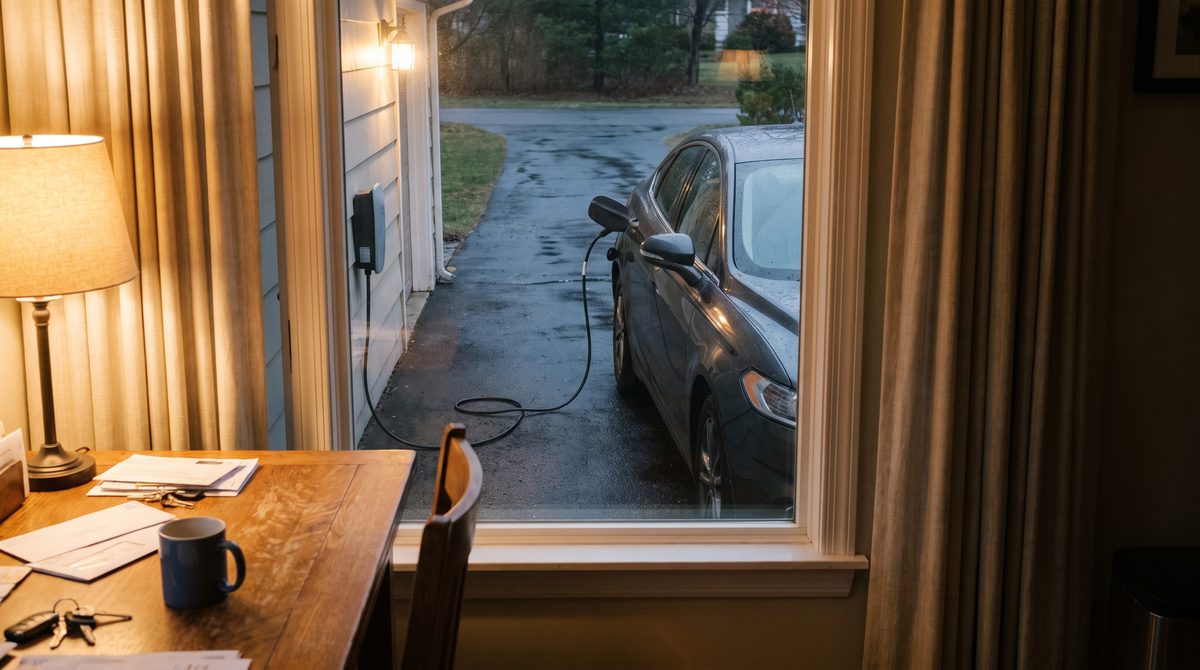
If you have a driveway, garage, or any dedicated parking where you can install a home charging point, daily electric driving for school runs and errands is close to the best case for this technology. You plug in overnight the way you plug in a phone, and every morning you start with a full charge. There is no detour to a fuel station, no waiting around, no queue. For a household doing short, repeated local trips, this is arguably more convenient than a gas car, not less, because refueling stops being an errand at all.
If you cannot charge at home, that convenience mostly disappears. You are now dependent on public charging points, which means planning around their location, their availability, and the time it takes to charge there, which is longer than filling a tank even on a fast charger. For a family without home charging, an electric car turns a non-event (topping up overnight) into a recurring logistical task. This single fact, whether you can charge at home, matters more to whether an EV suits your family than anything about the car itself.
The one long trip a year
This is where electric ownership asks the most of you, and where gas keeps its clearest advantage. A long trip means driving further in a day than the car's charge comfortably covers, which means stopping to recharge partway, and a charging stop takes meaningfully longer than a fuel stop. On a single annual trip this is an inconvenience you can plan around: you build in a longer break, you time it around a meal or a rest stop the kids need anyway, and you check charger locations along the route before you leave rather than assuming you will find one.
It stops being manageable if your "one long trip a year" is actually several, or if the route runs through an area where charging infrastructure is thin. Be honest about how many long trips you really take, because the family that takes one summer holiday drive a year has a very different experience than the family that does that drive plus regular visits to grandparents three hours away.
The running-cost structure of each
The two technologies do not just cost different amounts, they cost differently, and that shape matters for a family budget as much as the total.
Electric: cheaper to run, more upfront
An electric car's ongoing costs are generally lower and more stable. Electricity used for charging typically costs less per mile of driving than gasoline, especially if most of your charging happens at home overnight. Electric motors also have far fewer moving parts than a combustion engine, which usually means less routine maintenance: no oil changes, fewer fluids, less that wears out through friction. Brake wear is often lower too, because these cars use the electric motor to slow down for much of everyday driving.
The tradeoff typically sits at the purchase price and at home charging setup, which can mean a larger upfront outlay before you ever save a cent on fuel. Whether that tradeoff pays off depends on how many miles you drive and how long you keep the car, since the savings are ongoing but the extra cost is paid once.
Gas: cheaper upfront, pricier to keep running
A gas car generally costs less to buy and needs no home charging installation, so the entry cost is lower. Its running costs are higher and less predictable: fuel prices fluctuate, the engine needs regular oil changes and other scheduled maintenance, and there are simply more mechanical parts that can eventually need replacing. None of this is a crisis, it is just a steadier drip of smaller costs rather than one bigger cost paid early.
What this means for a family budget
If you keep cars for a long time and drive a lot, the electric cost structure tends to work in your favor because the savings compound over years. If you trade cars in every few years or drive relatively little, the higher upfront cost of electric has less time to pay itself back. There is no universal right answer here. Match the cost structure to how long you actually keep a car, not how long you tell yourself you will keep it.
The premium-fuel question for gas cars
This one causes more wasted money and more unnecessary anxiety than it should, because the rule is simpler than it sounds and the manual already answers it.
When premium fuel is actually required
Some gas engines, usually higher-performance or higher-compression designs, are built to require premium fuel. If your owner's manual says "premium fuel required," it means the engine is calibrated around that fuel and using a lower grade can cause knocking or reduced performance over time. This is not a suggestion. If your manual states it as a requirement, follow it.
When it does nothing at all
Most family cars are built for regular fuel and are designed to run properly on it. If your manual says premium is "recommended" rather than "required," or does not mention it at all, paying extra for premium in that engine typically buys you nothing measurable. The engine was not built to extract any extra performance or efficiency from the higher grade, so the extra cost per fill-up is simply extra cost.
The one-minute check that settles it
Open your owner's manual, or search your exact model's manual online, and look at the fuel section specifically for the word "required" versus "recommended" or no mention at all. That single word is the entire answer. Do not go by what a fuel station attendant tells you, what a friend's car needs, or what feels like it should be true for a nicer-feeling engine.
What to do this week
Pull up your own car's manual, or the manual for a car you are considering, and check that one line about fuel requirement. Then write down your actual weekly mileage and whether you have anywhere to install home charging. Those two small pieces of information, not anything in a brochure, are what will actually tell you which kind of car fits your family.