Cutting Household Costs Without Making Everyone Miserable
You already sense that the household spends more than it should. What you probably do not have is a ranked list of where to look first.
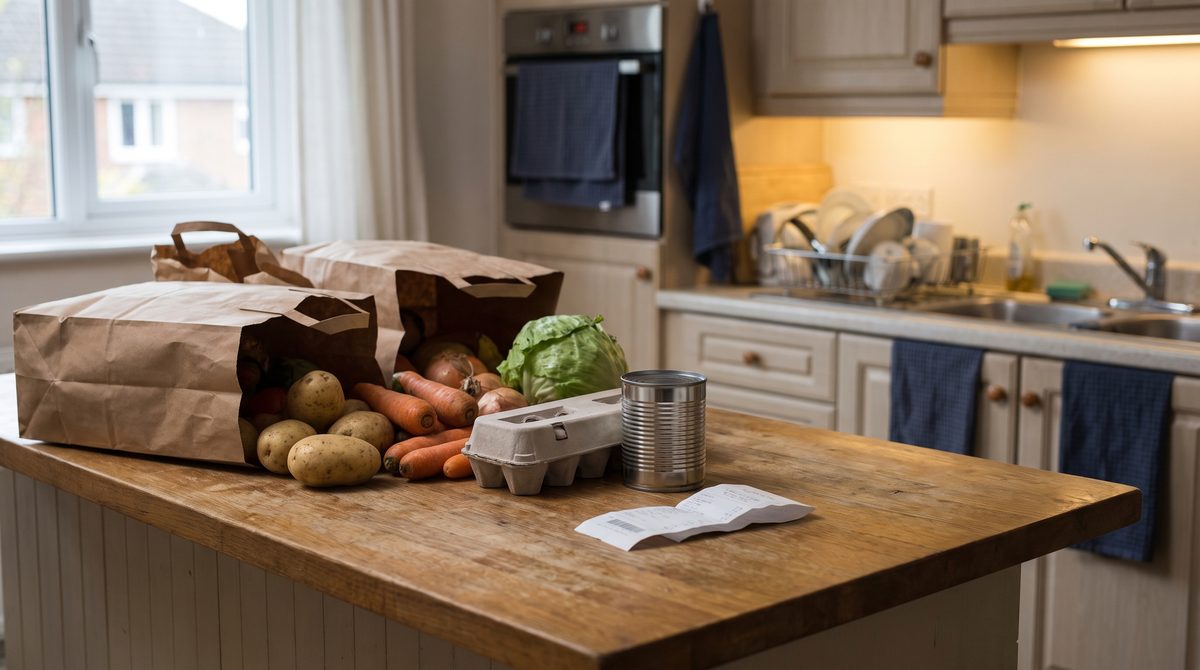
Where the money is actually leaking
You already sense that the household spends more than it should. What you probably do not have is a ranked list of where to look first. Some leaks are painless to close and pay you back every month without anyone noticing. Others save more in theory but cost you an argument, a habit change, or a kid's disappointment to get there. Start with the first kind. Save the second kind for when you have the appetite for it.
The ranking logic
Two questions decide the order: how much does closing this actually save, and how much does closing it hurt. A leak that saves a little and hurts nobody goes first. A leak that saves a lot but requires the whole family to change how it eats goes last, not because it does not matter, but because you will not sustain it if you start there.
Subscriptions: high savings, almost no pain
This is the easiest money in the house, and it is easy precisely because subscriptions are designed to be forgotten. A streaming service, a fitness app, a cloud storage tier, a magazine you meant to cancel after the trial. None of these were a mistake when you signed up. The mistake is that nobody re-checks them once they are running.
The mechanism here is not willpower, it is a calendar reminder. Once every three months, open the bank or card statement and read every recurring line, not just the ones you remember. Cancel anything nobody in the house can name a specific recent use for. This costs you nothing in daily life. Nobody misses a service they had forgotten they were paying for.
Where it gets slightly harder: shared or family subscriptions where one plan replaces what would otherwise be several. Check whether you are paying for a family tier at the size you need, or a leftover tier sized for a household that used to be different.
Insurance and utilities: high savings, low pain, but real effort
This is the second-best trade in the house. The saving can be substantial and nobody in the family experiences any change in daily life, because the product or service itself does not change. What changes is who you buy it from and on what terms.
The reason this money sits on the table is inertia, not loyalty. Insurers and some utility providers price new customers lower than renewing ones, on the reasonable bet that most people will not shop around at renewal. The mechanism to break this is a fixed date, not a mood: pick the renewal date for home insurance, car insurance, and any utility you can actually switch, and put a firm reminder a few weeks before each one. At that reminder, get at least one comparison quote before you renew automatically. You are not required to switch. You are required to check, because checking is what removes the "loyalty penalty" that unshopped renewals tend to carry.
The effort cost is real: a phone call or a comparison search takes time you would rather not spend. But the pain lands on you once a year for twenty minutes, not on the family at all.
Convenience spending: medium savings, medium pain
This is the food delivery, the last-minute takeaway because nobody planned dinner, the coffee shop stop on the way to school drop-off, the small daily purchases that do not feel like spending because each one is small. The mechanism is not that any single instance is expensive. It is that convenience spending fills a planning gap, and it fills it at the highest possible price for whatever it is buying.
The fix that actually works is not "stop buying convenience food." It is closing the planning gap that makes convenience the only option at 6pm. If dinner is decided by Sunday for the week ahead, even loosely, the 6pm decision stops being a decision under pressure, and pressure is what convenience pricing exploits. This has a real cost: someone has to spend twenty minutes on Sunday thinking about the week, and that person will feel the loss of a currently-unclaimed hour more than anyone else in the house will feel the saving.
Where the pain shows up: cutting this out cold turns "convenient" into "restrictive" in the kids' eyes fast, especially if a takeaway night was actually a small ritual rather than a fallback. Keep the one that is a ritual. Cut the ones that were only ever a symptom of not having decided anything.
Grocery habits: high savings, high pain if handled badly
Groceries are usually the largest controllable line in the budget after housing, which is exactly why the impulse is to attack them first. Resist that. The mechanism that actually reduces a grocery bill without a fight is buying against a list built from a plan, not shopping and building the plan from what looks good in the aisle. Aisle-first grocery shopping reliably costs more, because the store's entire layout is built to generate additions to a cart that had no additions planned.
The pain comes from two places. First, a list-first approach only works if the plan behind it is realistic about what the family will actually eat, not what a healthier version of the family would eat. A list built from aspiration rather than habit gets abandoned by week three. Second, cutting brand-name items for store-brand equivalents saves money with close to zero taste difference on many staples, but kids notice on a handful of specific items, and forcing every substitution at once invites a fight over the wrong thing. Substitute where nobody will notice. Keep the two or three items where they will.
The highest-pain version of this lever, cutting meat, cutting treats, cutting the branded cereal entirely, saves the most and should be attempted last, if at all, and only after the low-pain version has already been running long enough to be normal.
What to do this week
Pull up one bank or card statement and list every recurring charge on it. Cancel what nobody can justify. Then check the renewal date on your car or home insurance. If it is more than two months away, set one reminder now for three weeks before it, and do nothing else on this list until that reminder fires.