The Parenting Mistakes Almost Everyone Makes
You are not failing if you recognise yourself in this list. These are the ordinary missteps that show up in nearly every house with kids in it...
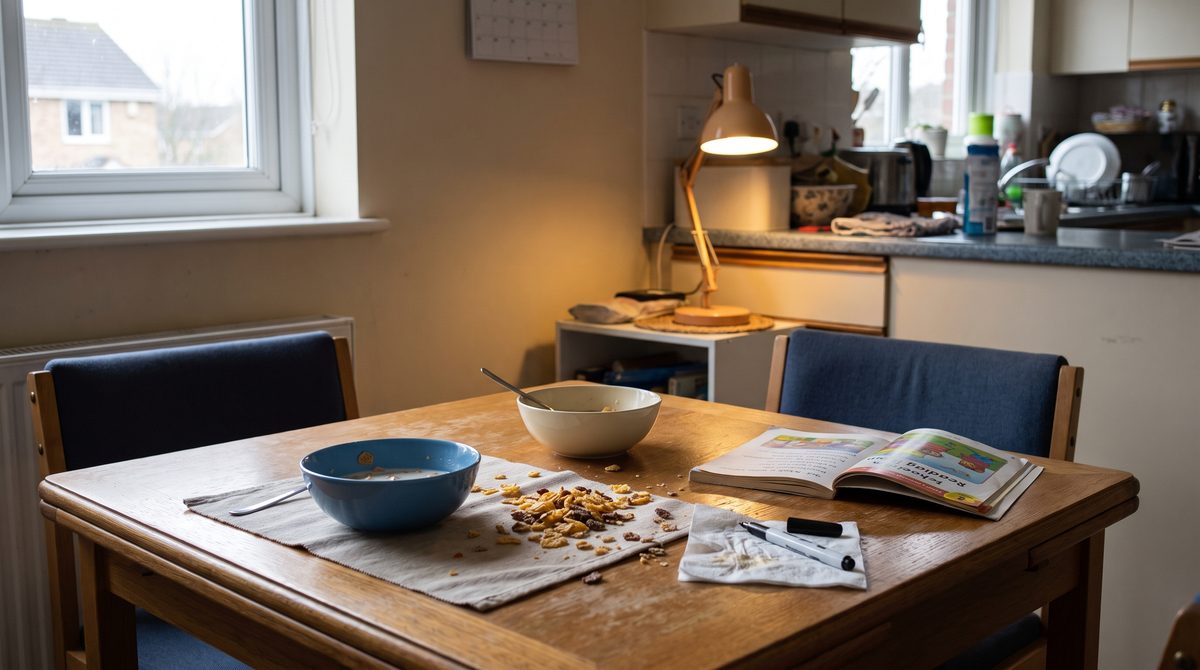
The mistakes almost every parent makes, and why that is not the point
You are not failing if you recognise yourself in this list. These are the ordinary missteps that show up in nearly every house with kids in it, not signs that something has gone wrong. Knowing the pattern is what lets you adjust it. Here are ten, and what each one actually costs.
1. Promising a consequence you will not follow through on
"If you do that again, no screens for a month" said in the heat of a bad afternoon sounds firm, but a month is longer than most households can actually enforce. When the consequence quietly shrinks to a day, the child does not learn that the rule was wrong. They learn that your word has a discount built in. Set a consequence you can actually carry out this week, not the one that feels satisfying to say out loud.
2. Negotiating in the moment instead of before the moment
Bedtime, screen time, and sweets are easiest to argue about right when the child wants something, because that is when they have the most leverage and you have the least patience. Deciding the boundary earlier, when nobody wants anything in particular, means you are enforcing a decision instead of making one under pressure.
3. Telling a small lie to end a conversation quickly
"The shop's closed" when it is not, "That toy is broken" when it works fine, "We're out of money" as a general deflection rather than a specific truth. Each one buys you a quiet five minutes. The cost shows up later: children work out which adults' claims need checking, and once they start checking yours, smaller true statements get the same scrutiny as the false ones did.
4. Comparing one child to another out loud
"Your sister never made this much fuss about it" is usually said without any intention to wound, but comparison is one of the few things children remember word for word years later. It does not need to be cruel to land hard. Describe the behaviour you want instead of the sibling who supposedly already has it figured out.
5. Filling every silence with a lesson
Not every car ride, meal, or walk needs to become a teaching moment. Kids can tell the difference between a parent who is present and one who is always slightly working, and the second one is harder to relax around. Some time with your kids should have no purpose attached to it at all.
6. Apologising for the outcome instead of the behaviour
"Sorry you're upset" describes their reaction, not your part in it. It sounds like an apology while placing the responsibility on the child's feelings rather than on what you did. "I shouldn't have snapped at you" is shorter, harder to say, and the only version that actually repairs anything.
7. Making money a source of anxiety rather than information
Kids pick up tension about money faster than they pick up the actual numbers. Refusing to discuss cost at all, or discussing it only when stressed, teaches them that money is a subject to be afraid of rather than a subject to be planned around. A calm "that costs more than we've set aside for this month" gives them something useful without any drama attached to it.
8. Letting guilt set the rules instead of judgement
A rule that changes because you feel bad about something unrelated, a missed evening, a short temper earlier in the day, teaches a child that rules are actually about your mood. Consistency does not mean rigidity. It means the rule holds regardless of how the day has gone for you.
9. Assuming a phase will just pass on its own
Some things do resolve without intervention. Others get comfortable the longer nobody addresses them, whether that is a habit, a friendship, or a way of speaking to you. Waiting is sometimes the right call and sometimes just delay dressed up as patience. Worth asking yourself which one you are actually doing.
10. Treating your own bad day as invisible to your kids
Kids read tone before they read words. A parent who is short, distracted, or flat and says nothing about it leaves the child to invent a reason, and children often invent themselves as the reason. A single sentence, "I've had a rough day, it isn't about you," costs nothing and closes off a guess that would otherwise run in the wrong direction.
What the small lies actually cost
None of the lies above are told with any bad intent. They are told because they are fast and the truth in the moment is inconvenient. The cost is not one dramatic betrayal. It is a slow recalibration: the child adjusts how much weight to put on what you say, a little at a time, without ever announcing that they have done it. The fix is not total honesty about everything at all times, which is neither possible nor useful with a young child. It is noticing which lies you reach for out of habit and replacing the habitual ones with a shorter true sentence. "Not right now" is almost always available and almost always true.
Why none of this is a verdict on you
Every item on this list appears in ordinary households, including ones where the kids turn out fine, because parenting happens in real time with a tired adult and a child who has better timing than you do. The point of naming the pattern is not to grade yourself against it. It is to give you something specific to adjust instead of a vague sense that you should be doing better.
One thing to try this week
Pick one item from the ten above, the one that stung a little to read, and give yourself one specific correction for it. If it was the follow-through problem, choose your next consequence to be something you can actually enforce for its full length before you say it out loud. If it was the small lie, catch the next one before it leaves your mouth and swap in "not right now." One change, held for a week, tells you more than trying to fix all ten at once.