Chores That Actually Teach Responsibility
You want your kids to grow into people who do things without being asked twice. Chores are the only regular, repeatable tool you have for that...
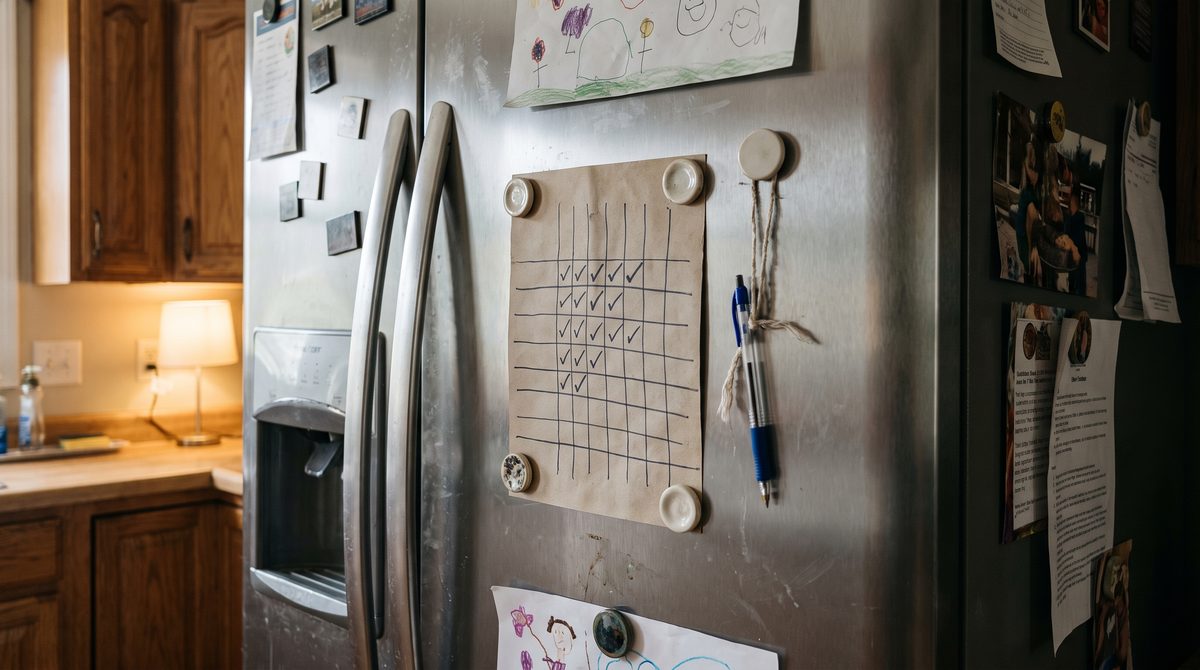
You want your kids to grow into people who do things without being asked twice. Chores are the only regular, repeatable tool you have for that, but only if you set them up so the responsibility sits with the child, not with your reminders.
What age actually changes
The chore itself matters less than the level of independence you expect at each stage. A task a five year old does "with you" becomes a task an eight year old does "checked by you," which becomes a task a twelve year old does "on their own, on a schedule." If you skip a stage, you end up either doing it for them or nagging them through it, and both teach the opposite of responsibility.
Toddlers, roughly two to four
At this age the chore is really a shared activity with a job title attached. Putting toys in a bin, carrying a napkin to the table, tossing dirty clothes toward the hamper. The standard is participation, not quality. You will redo most of it after they leave the room, and that is fine. The goal is that "helping" becomes a normal word before it becomes a negotiation.
Early school age, roughly five to eight
This is where a child can hold a short task from start to finish without you standing over them the whole time. Making their bed, feeding a pet, clearing their own plate, putting away their own laundry into drawers you've already sorted. Keep the list short, two or three things, and keep the standard realistic. A bed with a lump in the middle still counts as made.
Middle years, roughly nine to twelve
Kids this age can manage a task that has more than one step and some judgment involved: loading and starting a dishwasher, vacuuming a room and moving the furniture back, taking the bin out on the right day without a reminder text. This is also the age where you can hand over a task that affects someone besides them, like packing their own school bag, which shifts the consequence of forgetting onto them instead of you.
Teenagers
By the teenage years a chore should look close to something an adult does: cooking one full meal a week, doing their own laundry start to finish, managing a younger sibling's pickup on a set day, keeping a shared space usable without being told it's messy. The shift here is ownership of an outcome, not just a task. "Keep your bathroom clean" teaches more than "wipe the sink," because the teenager has to notice the problem, not just perform an instruction.
Should you pay for chores
There isn't a right answer here, and anyone who tells you there is one is selling something. Both approaches are defensible and plenty of families run each successfully.
The case for paying. Money is a real-world consequence, and tying it to work mirrors how income actually functions later in life. It also gives you a natural way to teach saving and spending, because the money came from effort your child can point to. Kids who are paid for chores often take them more seriously precisely because something is on the line.
The case for not paying. Contributing to a household you live in isn't optional for anyone else in the house, so making it optional for the child, contingent on payment, can undercut the point. If chores are paid, an allowance becomes a wage, and a child can decide the wage isn't worth it and opt out, which leaves you back where you started. Keeping chores unpaid and separate from any allowance keeps "we take care of this house together" as the actual lesson.
A middle path some families use is paying for tasks above the baseline (washing the car, a big yard job) while keeping the core household contributions unpaid. Whichever you choose, the specifics of amounts and how allowance should work belong in a household's own financial decisions, not in a general answer here. Pick a structure you can explain in one sentence and keep it consistent, because a system that changes rules mid-stream teaches the opposite of what you want.
The difference between a chore and a contribution
A chore is a task. A contribution is a task the child understands the reason for. "Take the trash out because I said so" is a chore. "Take the trash out because if it isn't out by Tuesday morning it sits for another week" is a contribution, because the child can see the consequence without you narrating it every time.
This distinction matters because chores done purely to avoid a consequence from you stop the moment you stop watching. Contributions persist because the child has internalized why the task exists. You build that understanding slowly, by naming the reason out loud a few times before you expect them to know it, not by assuming they'll infer it.
How to stop nagging from becoming the system
Nagging becomes the system when the chore only gets done after the third reminder, because at that point the third reminder is the actual mechanism, not the child's own initiative. A few things break that pattern.
- Attach chores to a fixed time, not a fixed reminder. "Before breakfast" or "before screen time" works better than "at some point today," because the child has to track it against something happening anyway, not against your voice.
- Let the natural consequence land once before you intervene. If the laundry doesn't get done, let them run out of clean shirts once. It teaches faster than a tenth reminder ever will.
- Say it once, then stop talking and start observing. If you've reminded a child once and they know the expectation, further reminders are you doing the remembering for them. Step back and see what happens instead of narrating the task into existence.
None of this works if the standard keeps shifting. Decide what "done" looks like for each task, say it once, and hold the same line every week.
One thing to do this week
Pick one chore your child currently does only after reminders, and this week, give the reminder exactly once at the start of the day, then let the natural consequence play out if it doesn't get done. Watch what actually happens before you decide whether the system needs a bigger change.